
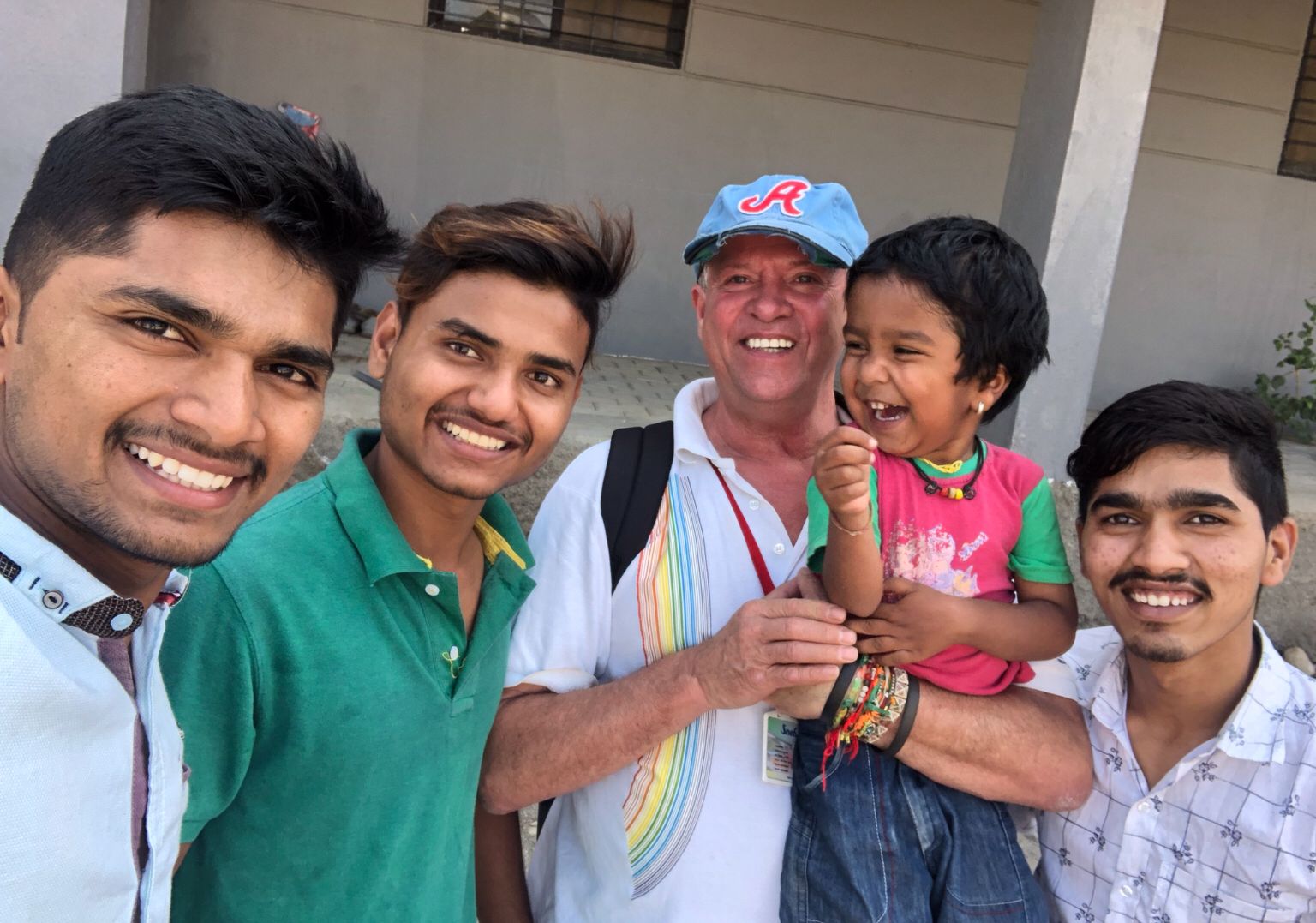
A kitchen-table idea in London is changing the lives of vulnerable children and women in rural India.
Miranda Hudson first travelled to India from UK in 2009 for six weeks. She didn’t know then that the trip would be life-transforming.
She had gone to volunteer with Snehalaya, a charity in little-known Ahilyanagar. Its name means Home of Love. Its mission: to stand with women, children and LGBTQ+ people facing HIV, trafficking and violence.
Hudson returned to London with what she calls “a sense that I needed to do more.” She gathered friends around her kitchen table, reached out to past UK visitors, and began building what would become Snehalaya UK.
Miranda was joined by Joyce Connolly, Nick Cox and Sarah Rastall and a few others. Each one of them have immensely contributed to raising funds for Snehalaya in the UK
The UK group formalised in 2010 and registered as a charity in 2015. Since then, it has channelled £574,000 to India.
But the real impact can’t be measured in numbers.
A bridge between India and UK
Starting with small fundraising events the UK volunteers went on to garnering support through Global Giving, Malala Foundation, Mercury Phoenix Trust to support the projects in India.
In India, Snehalaya works to empower women, children, and LGBTQ+ individuals who are victims of poverty, sexual exploitation, and discrimination.
The funds go into women rehabilitation, child welfare, health care, community outreach, advocacy and empowerment.
Despite having no office or staff, Sne halaya UK runs on “passion and commitment,” says Hudson — and it shows.
Connolly, present Snehalaya UK CEO is connected with the charity since 2011 when she started leading groups of student volunteers visiting India. She moved to India to help with organisational development in 2016 and is still there.
With one leg in the UK and the other in India, she connects the work of the two teams and boards with a focus on communications, fundraising and volunteer management.
Secretary Priti Bhombe credits Connolly with strengthening the charity’s voice. “She helped us improve public relations, expand our social media and try new ways of fundraising,” Bhombe says.
Cox forged a different connection. A former actor who loved London life, he visited India after losing several family members to cancer.
A chance encounter with a Snehalaya volunteer on a crowded bus changed everything. The volunteer showed him videos of the charity’s work with sex workers and people living with HIV. “I was moved beyond words,” Cox says.
He made a documentary to raise support back home. Then in 2015, he packed his bags and moved to the campus. Founder Girish Kulkarni says, “the children adore him”.
He has a special bonding with those who are shunned in a conservative society.
Why the UK link matters
In order to understand the significance of the intervention of UK, it is essential to understand how and where Snehalaya works.
Based in Ahilyanagar in the state of Maharashtra in India, it runs 27 projects across the district, most of which is rural and underdeveloped region. The founder Girish Kulkarni and his staff have faced multiple hurdles and even physical assault as many issues they are working on are taboos in India.
Snehalaya UK brought an international perspective and open-mindedness which has shaped the lives of the most vulnerable in the local community.
Their support has changed individual lives.
Anjum, a teenager married off to an older man, escaped abuse and found safety at Snehalaya. Through the Malala Fund partnership brought in by UK volunteers, she trained as a nurse and rebuilt her life with dignity.
Chaitanya arrived at age four, vulnerable to the cycle of exploitation Snehalaya was created to break. Thanks to Mercury Phoenix Trust funding and Cox’s mentorship, he grew into a confident young entrepreneur. When he opened his tailoring shop, Cox was his first customer.
When 17-year-old Heena faced bone cancer, it was Cox who sat beside her through every round of chemotherapy until she passed away in 2022.
Sharing knowledge, not just money
Rastall, a teacher from Leicester, turned her skills into a UK–India exchange programme connecting classrooms and educators. Snehalaya’s school made it to the top three schools in the world in T4 Education’s World’s Best School Prizes 2023.
Rastall too had visited Ahilyanagar as a volunteer and continued to garner support for the work back home.
A founding member and trustee, she plays a major role in broadening the base of the charity in UK.
The flow of volunteers and experts from UK to India continues. Cultural and language barriers have never stopped the team.
Hudson recalls screening a documentary about Malala in remote villages. “We didn’t know the local language,” she says, “but girls still came forward to share their pain and their hopes.”
A strong support
Today, Snehalaya UK remains fully volunteer-led. Two founding members live in India; the rest are spread across the UK. Still, they’ve delivered major campaigns, brought in international partners and built a growing supporter base.
Kulkarni says the relationship has changed the organisation. “Joyce and Nick, who stay with Snehalaya India play an active role in policy and decision making. We may disagree, but we find consensus.”
Their insights matter in a conservative society like India where transgender or HIV affected find it difficult to be accepted.
For Snehalaya’s beneficiaries — survivors of abuse, trafficking, stigma and exclusion — the bond with UK volunteers has meant acceptance, advocacy and a path to independence.
Achievements
Snehalaya UK has helped secure:
• Three projects with the Malala Fund
• The #HerVoice campaign against gender violence
• A five-year teacher exchange with the British Council
• Mercury Phoenix Trust support since 2015
• Charity partnership with the Just Bollywood student dance competition
• Volunteer programmes with Leeds Beckett University
…………………………………………..