
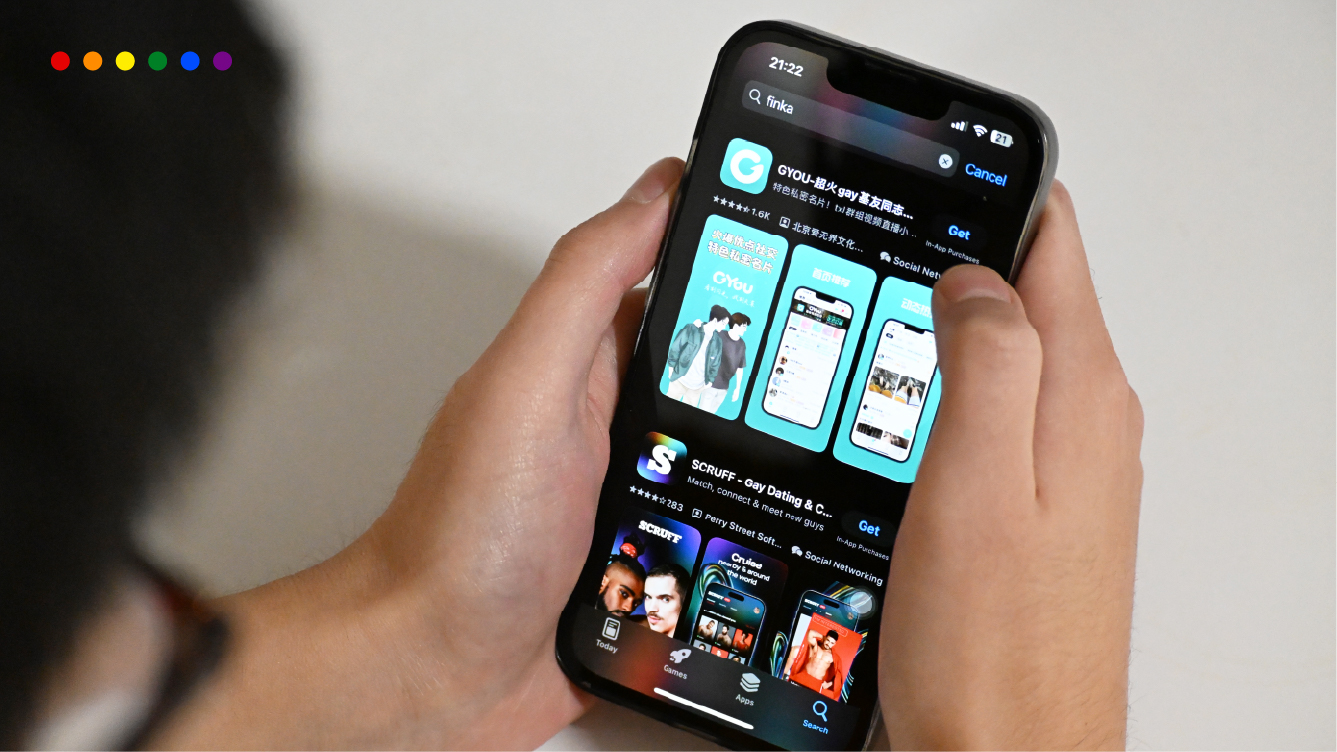
Apple has removed two of China’s most widely used gay dating apps, Blued and Finka, from its App Store on the orders of the Cyberspace Administration of China (CAC).
An expert on gender culture in Asia, TUVA LGBT researcher Ngoc Hiep Nguyen believed the removal was part of a process that has been going on for years in China to narrow the space for the LGBT community in both culture and law.
Launched in 2012, Blued was the most popular domestic dating app for gay men in China. It has 40 million registered users worldwide. Finka was launched in 2014 and had about 2.7 million registered users in 2019.
In 2020, Blued’s parent company acquired Finka, which continued to operate as a separate, complementary app.
Blued and Finka are not the first apps to be banned in China.
In 2022, the popular US-based gay dating app Grindr was removed from Apple’s App Store in China shortly after the Cyberspace Administration of China began a crackdown on content it viewed as illegal and inappropriate.
Offline LGBT spaces have also come under pressure. LGBT civil society organisations have been forced to close, and Shanghai Pride, the country’s biggest pride event, was suspended in 2020.
In September, a horror film was digitally altered to turn a gay couple into a straight couple for its release in China.
Nguyen noted that in traditional and conservative societies like those in Asia, the LGBT community had long been unable to come out openly. Therefore, the internet and online community platforms became significant. They built their communities from forums, websites, social networks and dating apps.
Nguyen said: “The internet is a particularly important part of the LGBT community in Asia in general and China in particular and for Chinese living abroad.”
As a member of the LGBT community, Nguyen shared that cyberspace has not only enabled LGBT individuals in Asia to explore and shape their identities but also provided opportunities to connect through organizations, forums, and other platforms.
Apple’s removal of these apps in mainland China affected not only domestic users but also users abroad. Lux was one of them. He is a Chinese gay man based in London. Lux had to delete his Blued account when he moved abroad, making Finka was only option. However, with both apps now removed, he has fewer opportunities to connect with the domestic queer community.
“On a personal level, the impact is practical,” he said. “I also tried some UK gay apps, but I’m not very familiar with them and most users are not Chinese, so the experience is quite different.”
Lux believed the removals might slow progress toward wider social acceptance but remained hopeful that new queer social platforms would emerge. “The demand won’t simply disappear,” he said. “But the gap between online space and real life remains huge.”
He also said legal changed alone may not shift attitudes, noting that even if same-sex marriage were legalised, his parents would still reject it.
Homosexuality was decriminalised in China in 1997, though same-sex marriages remain unrecognised.